Brainspotting: A Targeted Approach to Trauma Processing
Introduction:
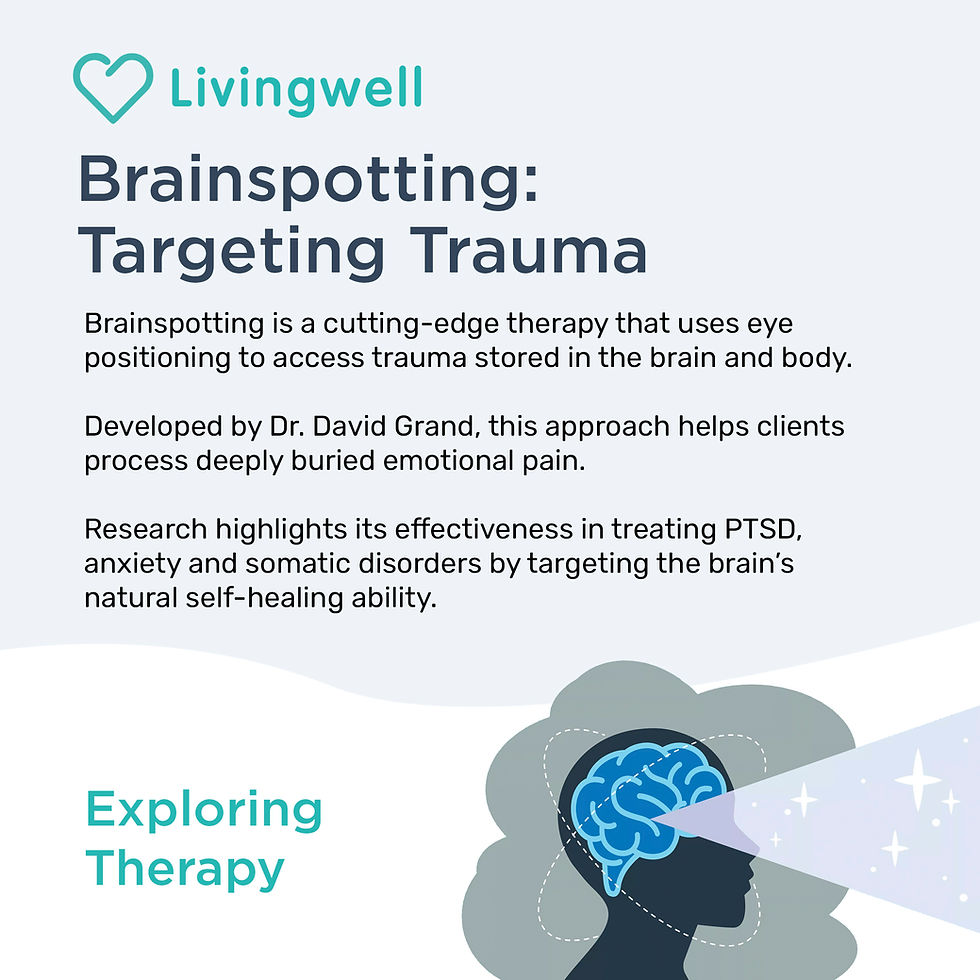
Brainspotting (BSP) is a cutting-edge, brain-body trauma therapy developed by Dr. David Grand. It is founded on the discovery that eye positioning can access trauma stored in the subcortical brain and body. By targeting the brain's natural self-healing ability, Brainspotting facilitates deep and rapid processing of emotional pain.
How Brainspotting Works:
Brainspotting hypothesizes that where you look affects how you feel. A "brainspot" is the eye position related to the traumatic memory or distressing emotional activation. When a client focuses their eyes on this spot while simultaneously focusing on a painful or activated issue, it appears to facilitate the brain's innate capacity to process and release the material.
Clinical Applications: Research highlights BSP's effectiveness in treating:
PTSD and Anxiety: Targeting the neurological source of hyper-arousal and emotional distress.
Somatic Disorders: Addressing physical symptoms that have an emotional or traumatic root.
Emotional Pain: Helping clients process deeply buried emotional material that may be resistant to talk therapy.
Clinical Relevance:
Clinicians utilize Brainspotting to access and process material that is held deep within the limbic system, often below the level of conscious verbal processing. It is a highly focused approach that respects the client's internal process and is typically utilized alongside traditional therapeutic modalities, particularly in trauma recovery work.


